




Introduction
Creating a nurturing and inspirational environment for your baby is crucial, and nursery wall art plays an essential role in achieving this. Wall art does not merely serve an aesthetic function; it also fosters creativity, stimulates imagination, and can even aid in a child’s cognitive development. As we approach 2025, many parents are eager to explore the latest trends in nursery wall art that can elevate their child’s space. This article highlights the top nursery wall art trends for 2025, providing actionable insights and ideas for parents looking to design a beautiful and engaging environment for their little ones.
Trend 1: Nature-Inspired Designs
One of the most significant trends in nursery wall art for 2025 is nature-inspired themes. This trend seeks to bridge the gap between indoor spaces and the natural world.
- Floral Patterns: Floral art brings a fresh and inviting feel to any nursery. Designers are focusing on vibrant colors and intricate details in floral illustrations to create a lively and calm atmosphere. Whether opting for oversized floral prints or delicate watercolor designs, floral patterns can have a softening effect on the room’s aesthetic.
- Botanical Illustrations: Incorporating botanical illustrations into nursery decor adds a sense of tranquility and fosters an appreciation for nature. These illustrations often feature a variety of plants, ranging from tropical foliage to desert botanicals, allowing parents to create a lush, peaceful setting.
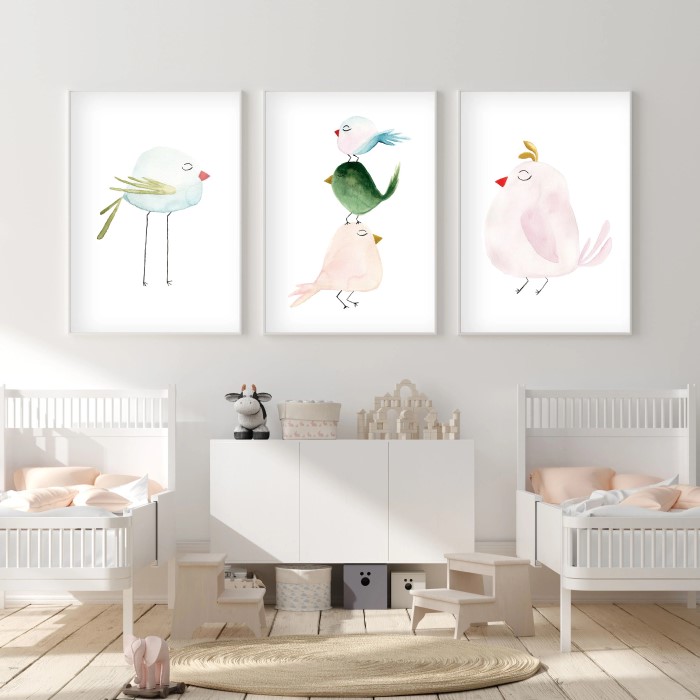
- Animal Motifs: Animal-themed artwork continues to be a crowd-pleaser. Illustrations that depict woodland creatures, safari animals, or even farm animals can stimulate curiosity and encourage children to learn about wildlife. Featuring animals in a playful and friendly manner can create a sense of comfort for your child.
This nature-focused approach promotes environmental awareness and creates a calming atmosphere that benefits both the child and the parent.
Trend 2: Personalization and Customization
In 2025, personalization in nursery wall art has become increasingly popular. Customized pieces allow families to express their values and create a unique ambiance.
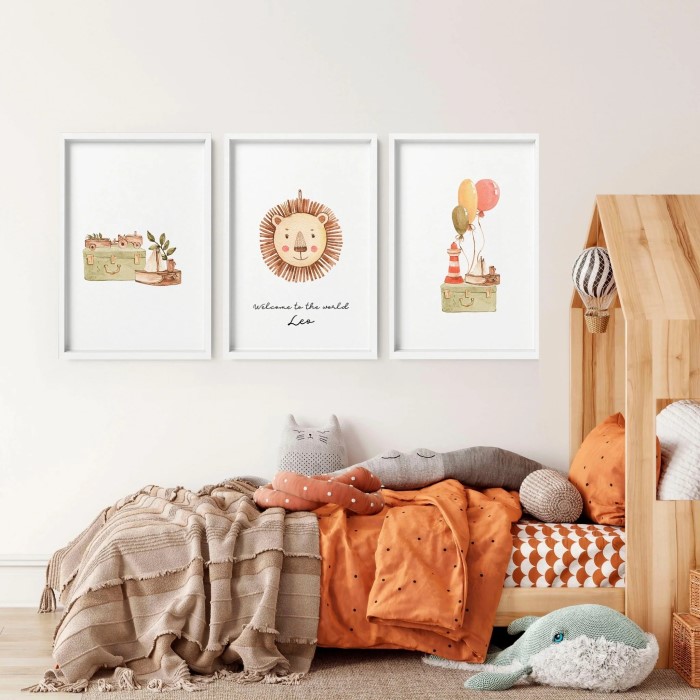
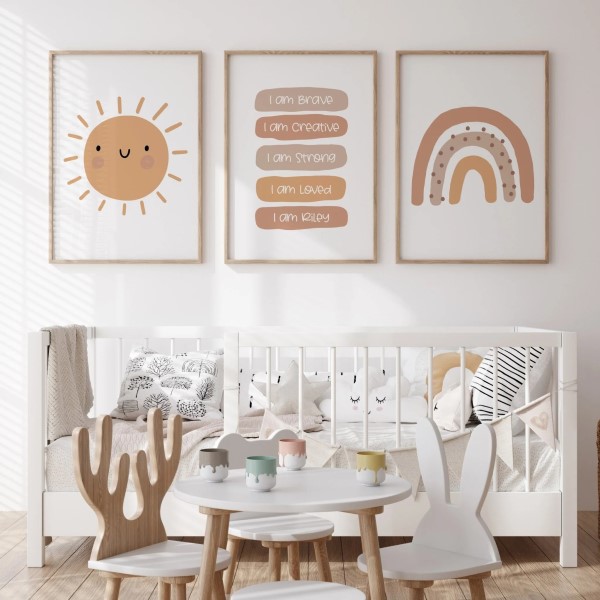
- Name Art: Featuring the child’s name in stylized fonts is a heartwarming way to personalize nursery decor. Custom name art can be beautifully crafted in various fonts, sizes, and colors, making it a focal point in the room.
- Milestone Prints: Personalized art detailing important milestones—like birth stats (weight, height, date, and time)—has become a cherished keepsake. These prints celebrate a child’s unique story while serving as delightful decor.
- Photo Collages: Creating a photo collage wall using frames filled with family memories is a wonderful way to infuse love and connection into the nursery. Mixing family photos with playful art helps bridge the gap between the child’s world and family history.
Personalization offers parents a way to create a special connection to their child’s space, adding layers of meaning to the decorative elements within the nursery.
Trend 3: Whimsical and Playful Designs
Another significant trend for nursery wall art in 2025 is the incorporation of whimsical and playful elements. This design choice stimulates a sense of joy and creativity.
- Fantasy Themes: Art that explores fantastical landscapes, whimsical creatures, and fairytale themes encourages imaginative play. From friendly dragons to magical castles, these designs contribute to a child’s storytelling abilities.
- Interactive Features: Wall art that incorporates interactive elements, from chalkboard paint to removable wall decals, allows children to engage with their surroundings actively. Creative illustrations can inspire children to draw or write, fostering a hands-on approach to art.
- Bright, Bold Colors: Utilizing bright and vibrant colors in nursery art creates an energetic atmosphere. Colorful patterns and cheerful illustrations cultivate a sense of playfulness and joy, turning the nursery into an exciting environment for exploration.
Whimsical designs encourage imaginative play and storytelling, ensuring the nursery remains a place of wonder that fuels creativity.
Trend 4: Minimalist and Modern Styles
The minimalist trend continues to influence nursery decor, with a focus on simplicity, clean lines, and functionality.
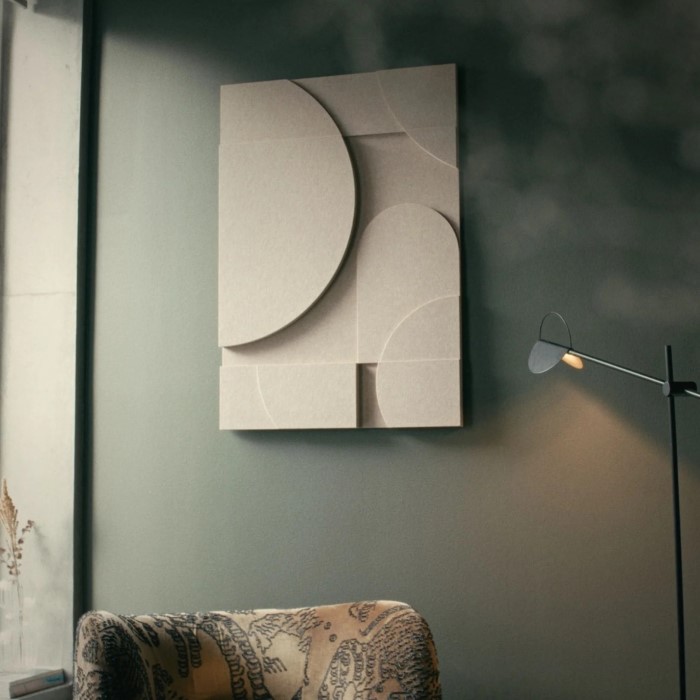
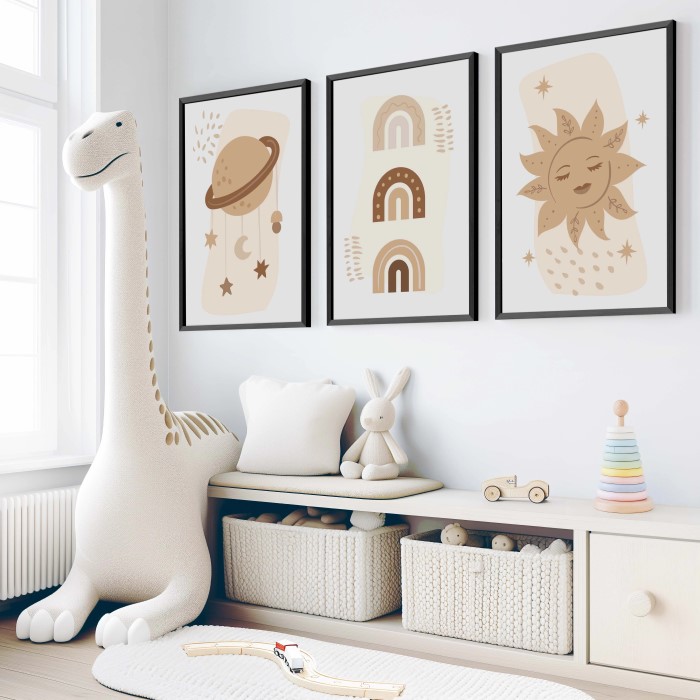
- Simple, Clean Designs: The use of straightforward patterns and minimalistic wall art can create a clutter-free, calming space. Geometric shapes and abstract designs can add sophistication while maintaining an airy feel.
- Neutral Color Palettes: Soft, neutral tones—such as beige, light gray, and pastels—are highly sought after in modern nurseries. These palettes allow for versatility and can create a warm, inviting space that is easy to coordinate with other furniture and decor.
- Functional Art: Modern designs often combine artistry with functionality. Items like artful shelving with attached artwork serve dual purposes, enhancing aesthetics while providing storage and organization solutions.
This minimalist approach emphasizes clarity and functionality, creating an organized environment that fosters calmness and focus.
Trend 5: Eco-Friendly and Sustainable Options
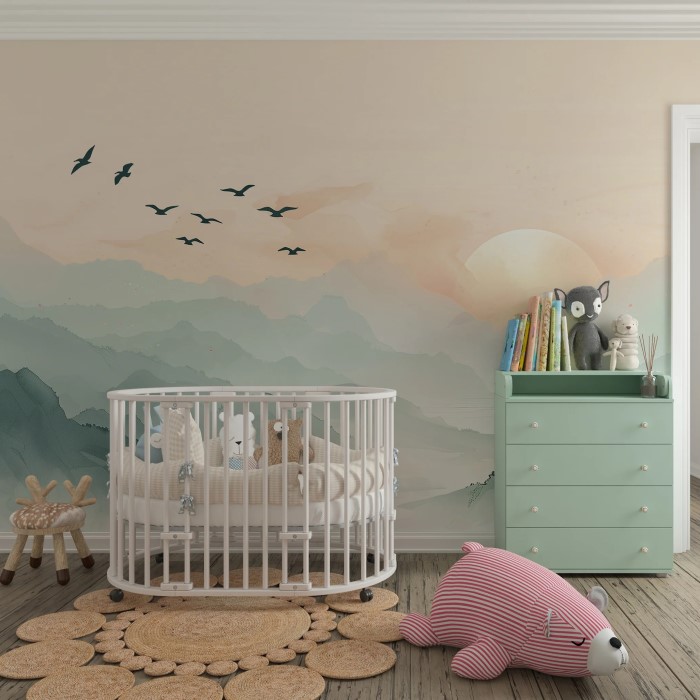
As environmentally-conscious choices become more mainstream, eco-friendly options for nursery wall art are gaining traction.
Sustainable Materials
1. Growing Preference for Eco-Friendly Art
In recent years, there has been a notable shift towards sustainable materials in art, particularly in nursery wall decor.
- Use of Recycled Materials: Many artists are now incorporating recycled materials into their artwork. This may include everything from repurposed papers and fabrics to reclaimed wood and metal, significantly reducing waste and promoting recycling.
- Eco-Friendly Inks: The adoption of eco-friendly inks is becoming more common among printers and artists. These inks are made from natural pigments and are free from harmful chemicals that can adversely impact the environment.
- Non-Toxic Finishes: Non-toxic materials ensure that parents can feel safe about what is displayed in their children’s rooms. Art made with these materials minimizes harmful emissions and contributes to a healthier indoor environment.
2. Environmental Impact Reduction
Sustainable art practices help to minimize overall environmental impact.
- Reducing Carbon Footprint: By using sustainable materials and processes, artists can reduce their carbon footprint throughout the production cycle. This encompasses everything from sourcing materials to transport and production methods.
- Support for Environmental Conservation: Choosing artwork made from sustainable resources often aligns with and supports broader environmental initiatives. Many artists contribute part of their proceeds to conservation efforts, reinforcing the connection between art and ecological stewardship.
Supporting Local Artisans
1. The Rise of Local Artisans
More parents are increasingly seeking out local artisans who focus on sustainable practices.
- Unique and Custom Creations: Local artists often provide unique pieces that reflect personal styles and community characteristics. This creates an opportunity for families to acquire artwork that is not just unique but also tells a story.
- Connection to Community: Supporting local artisans fosters a strong community bond. Parents are not just purchasing décor; they are building relationships with artists who share similar values regarding sustainability and creativity.
2. Economic Contribution
Purchasing art from local artisans directly contributes to the local economy.
- Boost in Local Economy: Supporting local artists ensures that money circulates within the community, helping to create jobs and support other local businesses. This economic model fosters resilience within communities.
- Encouraging Sustainable Practices: When families support local artisans, they encourage others in the community to adopt sustainable practices. This creates a broader impact, promoting awareness of eco-friendly choices beyond individual purchases.
Nature-Themed Conservation Art
1. Focus on Environmental Awareness
Integrating nature-themed conservation art into nurseries emphasizes the importance of environmental stewardship.
- Showcasing Endangered Species: Art that highlights endangered animals and their habitats fosters appreciation for biodiversity. These artworks can serve as conversation starters about conservation and the necessity of protecting the planet.
- Ecosystem Representation: Representing various ecosystems through art, such as forests, oceans, and deserts, helps children understand ecological interdependence. It can inspire curiosity about wildlife and natural environments.
2. Educating Children on Nature
Introducing children to nature-themed art can have lasting educational impacts.
- Fostering Responsibility Towards the Environment: Early exposure to conservation themes cultivates a sense of responsibility in children. When they see art depicting the beauty and fragility of nature, they are more likely to develop a lifelong appreciation for the environment.
- Encouraging Compassion for the Planet: Art serves as a medium for storytelling, and through narratives about conservation and wildlife, children can cultivate empathy for animals and a desire to protect their natural habitats. This emotional connection to nature encourages future generations to prioritize environmental responsibility.
Opting for eco-friendly decor ensures that nursery art aligns with modern values concerning sustainability while creating a beautiful and safe space for children.
FAQs About Nursery Wall Art
What to hang on walls in the nursery?
Families often consider personalized pieces, nature-inspired art, playfully themed designs, and family photographs. The key is to choose options that spark joy and encourage a nurturing environment.
What is the trend in nursery decor in 2025?
The trends for nursery decor in 2025 emphasize personalization, nature-inspired designs, whimsical elements, minimalist styles, and eco-friendly options. These trends focus on creativity and individualized expression.
How to fill empty space in a nursery?
To fill empty space, consider creating a gallery wall featuring a mix of art, photos, and quotes. Adding decorative decals, wall hooks, or functional shelving can also enhance aesthetics while providing usability.
What are some unique nursery themes?
Unique nursery themes include celestial, woodland adventure, vintage circus, modern bohemian, and space exploration. Choosing a theme can inspire cohesive wall art and overall room design.
Conclusion: Designing an Inspiring Nursery with Wall Art
In conclusion, nursery wall art significantly influences the aesthetic and emotional atmosphere of a child’s room. As we navigate through 2025, trends such as nature-inspired designs, personalized art, whimsical themes, minimalist styles, and eco-friendly options offer a plethora of choices for parents to enhance their nursery. By carefully selecting and incorporating nursery wall art that resonates with their values, parents can create an inviting and engaging environment that nurtures creativity and growth.
The right wall art can foster a sense of wonder, encourage imaginative play, and instill lasting memories within a child’s space. Embracing these trends allows families to craft not just a nursery but a haven filled with love, inspiration, and opportunities for exploration. Remember, the nursery is not merely a room; it is a personal sanctuary that supports the early stages of a precious life.